What is Scatter Feeding?
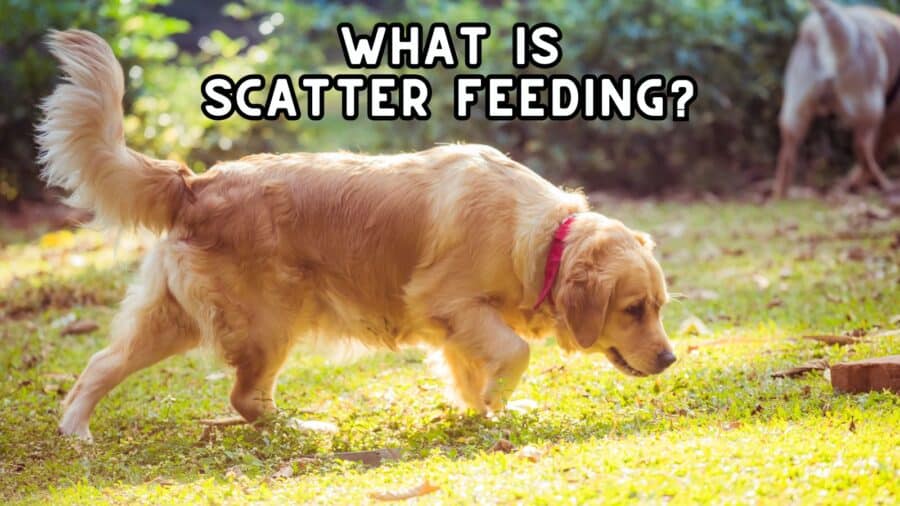
If you’ve ever tossed a handful of kibble into the grass and watched your dog’s nose go to work, you’ve seen scatter feeding in action. This simple enrichment activity taps into one of your dog’s most natural instincts: foraging.
Scatter feeding is easy, budget-friendly, and adaptable for nearly any dog. And best of all? It turns an ordinary meal into a mentally satisfying experience.
Understanding Scatter Feeding
Scatter feeding is exactly what it sounds like: instead of placing your dog’s food in a bowl, you scatter it across a safe surface and allow your dog to find and eat it piece by piece.
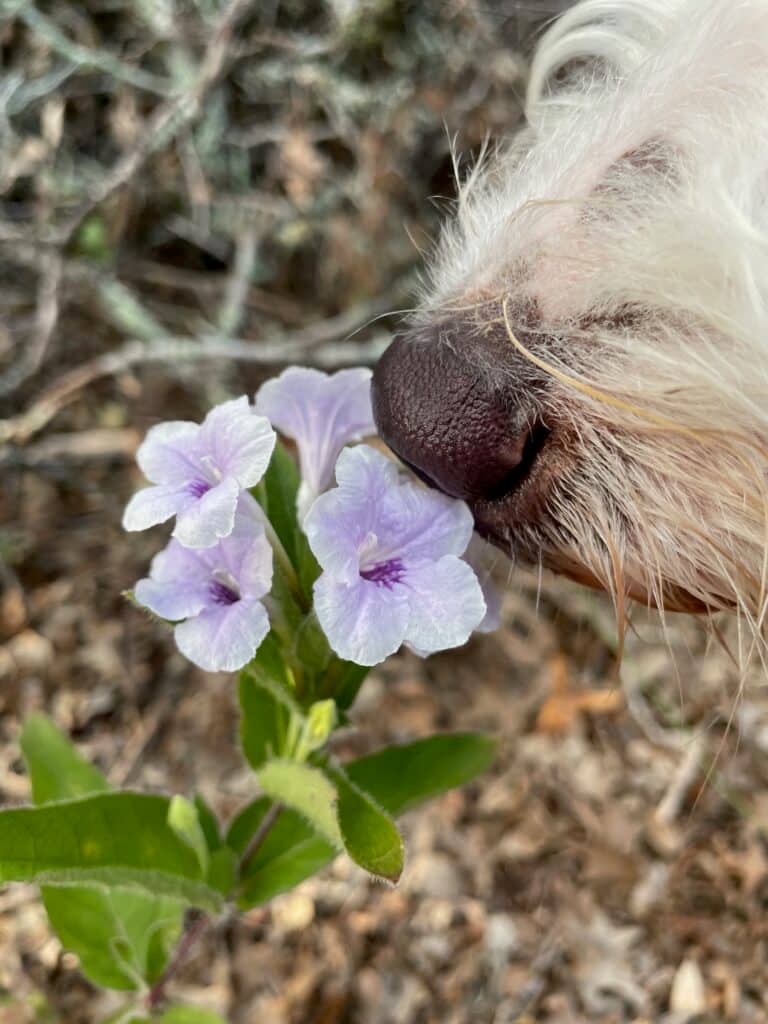
Dogs experience the world through scent. When we scatter feed, we give them a chance to engage in species-appropriate behavior. Sniffing lowers heart rate, reduces stress, and promotes calm focus.
It mimics the natural foraging behavior of wild canines, who would spend a large part of their day searching for food rather than consuming it in seconds.
Rather than gulping from a bowl, your dog must use their nose to locate food (rather than seeing it), forage for the food by moving from place to place, and problem-solve in a simple but satisfying way.
I started using scatter feeding years ago without realizing I was doing it…I was just offering the dogs an easy Easter egg hunt! Instead of hiding the kibble mixed with the occasional treat at fixed places around the yard, one year I was in an extra big hurry so I distributed the kibble much like sowing grass seeds, just throwing it out. The result: a LOT of fun for our dogs as they searched out every last morsel.
Mental exercise can be tiring and searching for scattered food requires concentration and decision-making. Ten minutes of focused sniffing can leave many dogs more satisfied than a quick walk around the block.
Dogs who inhale their food may benefit from scatter feeding. Because the food is spread out, they can’t gulp it all at once. It’s a simple alternative to a slow feeder bowl.
For shy or sensitive dogs, scatter feeding can be empowering. There’s no competition, no pressure — just your dog successfully finding “hidden treasure.” You can even use scatter feeding as part of confidence-building in new environments.
Because sniffing activates the parasympathetic nervous system (the “rest and digest” system), scatter feeding is often calming rather than arousing.
It’s a wonderful activity for:
- Rainy days
- Post-surgery rest (if vet-approved)
- Wind-down time in the evening
Indoor Scatter Feeding
Indoor scatter feeding is perfect when the weather doesn’t cooperate.
Good indoor surfaces include:
- Tile floors
- Hardwood floors
- Low-pile carpet
- Snuffle-friendly rugs
- Snuffle mats
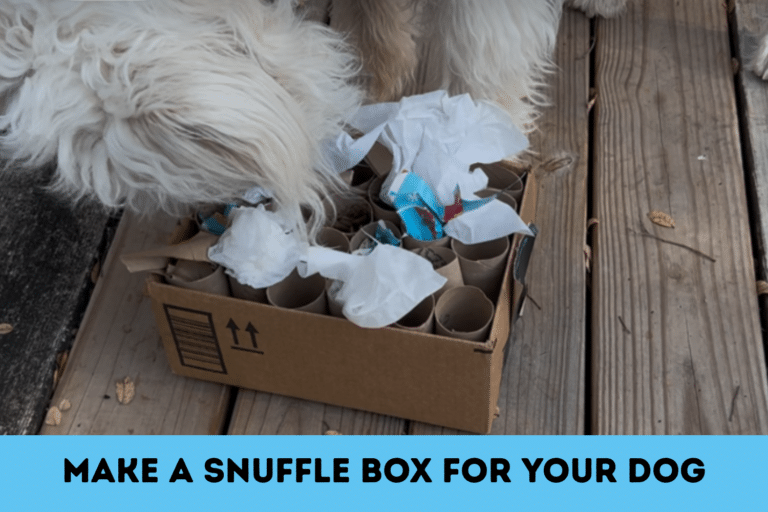
- Snuffle boxes you create, hiding the food within the box, tissue paper, etc.
- Large towels or blankets
You can:
- Toss kibble across a room and let your dog search
- Scatter food in a rolled-up towel
- Sprinkle kibble across a dry bathtub for easy cleanup
For beginners, start easy. Scatter food in visible areas so your dog understands the “game.” Over time, you can increase difficulty by spreading it farther apart or lightly hiding it along baseboards or under furniture edges (always safely).
Indoor scatter feeding is especially helpful for apartment dwellers who may not have access to a yard.
Supervise
If you have more than one dog, scatter feeding together may cause tension or guarding. It’s often best to separate dogs during enrichment meals but, if you feel comfortable doing this with multiple dogs, be sure to supervise.
You’ll also want to know your dog’s eating habits. If your dog routinely eats non-food items, scatter feeding might not be for him. You don’t want your dog chowing down on the cardboard box you made into a snuffle box!
Also, always measure the full meal before scattering so you don’t accidentally overfeed which is way too easy to do if you’re feeding from a bag.
How to Make Scatter Feeding More Challenging
Once your dog understands the concept, you can increase difficulty:
- Scatter in taller grass
- Toss food in multiple rooms
- Hide kibble under overturned cups
- Combine with basic training cues (“Find it!”)
But remember: enrichment isn’t about making things hard — it’s about making them satisfying.
Scatter feeding doesn’t require fancy equipment, expensive toys, or special training. It just requires a handful of food and a willingness to let your dog use their nose.
For dogs who live in a human-designed world, enrichment helps bridge the gap between what we ask of them and what their instincts crave.
And sometimes, the most powerful enrichment tool of all… is simply letting them sniff.
- Bear Dog Names: 265+ Names Inspired by Bears - August 22, 2026
- 200+ Police Dog Names: K9-Inspired Names for Dogs Big and Small - August 18, 2026
- What is Scatter Feeding? - August 18, 2026